Solar panels, sewer drains, and historic houses
This is an extra long newsletter that covers the last two council and council committee meetings. Grab some coffee and settle in!
April 6 council meeting recap:
Approval of solar panel lease for new Squantum School: The council unanimously allowed the administration to sign a 20-year lease (with optional 5-year extension) for Solect Energy to provide solar panels for the school. The company will pay all up-front and future maintenance costs and will sell the resulting energy to the City for 4 cents/kW, which is one-third the cost of what the City pays to power its own buildings (12 cents/kW, through the agreement it has with British Petroleum), and about one-fifth what National Grid charges (19 cents/kW). Building Commissioner Paul Hines answered questions from councilors, explaining that the City did not have to put out an open bid for the lease because it is run through a competitively procured program administered on behalf of the state, that the lease and power purchase agreement had been reviewed by an energy consultant, that Solect Energy had met with architects and designers of the new school to ensure that there was no need for the system to penetrate the roof (minimizing the risk of leaks, which he acknowledged has happened in some solar projects that date from the early 2010s); that multiple, connected panels will go offline in the event of a problem with any one of them, but that the company will be motivated to fix any issues quickly because the lease and power purchase agreement will contain a requirement for them to provide a minimum amount of energy or they will have to pay towards the City’s electricity bill. I learned a lot from the presentation and am so glad that the City is pursuing renewable energy! 🌞
Approval of penalties for dumping: Public Works Commissioner Al Grazioso said the City received 800 calls for sewer and drain backups of all kinds last year. Some of these were due to restaurants improperly managing their used fats, oil, and grease (“FOG”), which the health department requires be removed regularly. In recent months, the City has visited 426 of the 512 licensed food establishments to provide education about FOG reporting and disposal, finding 34 with active disposal issues. Currently, the only penalties the City can issue for such problems are a $50 fine from the health department and a $300 fine for plumbing violations. The new ordinances allow the DPW to issue fines of up to $5,000 for dumping prohibited materials into sewers or stormwater drains. This should help cut back on dumping, keeping our environment cleaner, reducing costly repairs, and avoiding state and federal fines to the City. Councilor Yuan, aided in part by Councilor Mahoney, added language to the ordinances to provide for public outreach about the rules, a written warning, and an administrative review process for fines, all of which the council voted to accept.
Open Forum: Residents spoke for up to three minutes each on topics that included not demolishing the Munroe Building in Quincy Center for the construction of a proposed performing arts building (the speaker provided a letter with more than 200 supporter names); regulating the sale of products containing chemically altered forms of the plant kratom; and making changes to an intersection where people have been killed.
Approval of $325,000 in Community Preservation Act (CPA) funding to paint/repair the Dorothy Quincy Homestead. I learned a lot about the CPA at this meeting and in the days leading up to it! Here’s the basics:
The CPA is a state-run program that allows communities that opt into it to add a surcharge of up to 3% (Quincy charges 1%) to property taxes and then use that money, along with some additional funding from the state (a 17% match in 2025), to offer grants for community projects. These must fall into four specific categories: historic preservation, open space, affordable housing, and recreation.
Applicants apply for funding in January, then take turns presenting their proposals at monthly meetings of the Community Preservation Committee (CPC) through May. The committee then ranks the proposals and presents their recommendations for funding to the mayor, who then asks the council to appropriate the funds, which become available in July (the start of the next fiscal year).
This year, the CPC unanimously approved this Quincy Homestead proposal (submitted by the National Society of Colonial Dames of America) early so that the painting could get started as soon as the weather was nice. The council had to decide whether to approve the funding, and as part of that process, Ward 1 Councilor David Jacobs reached out to the state, which owns the property and is responsible for maintaining the outside of the structure, to see if it could contribute any funds towards the work. The state replied that it had to focus its resources on more urgently needed repairs to other properties, and that if Quincy could not provide funding for this project, the state would have to stretch the work out over the next five years or more. Councilor Jacobs discovered that Quincy has spent about $520,000 on the property in the last five years — 26% more than the state in the same timeframe.
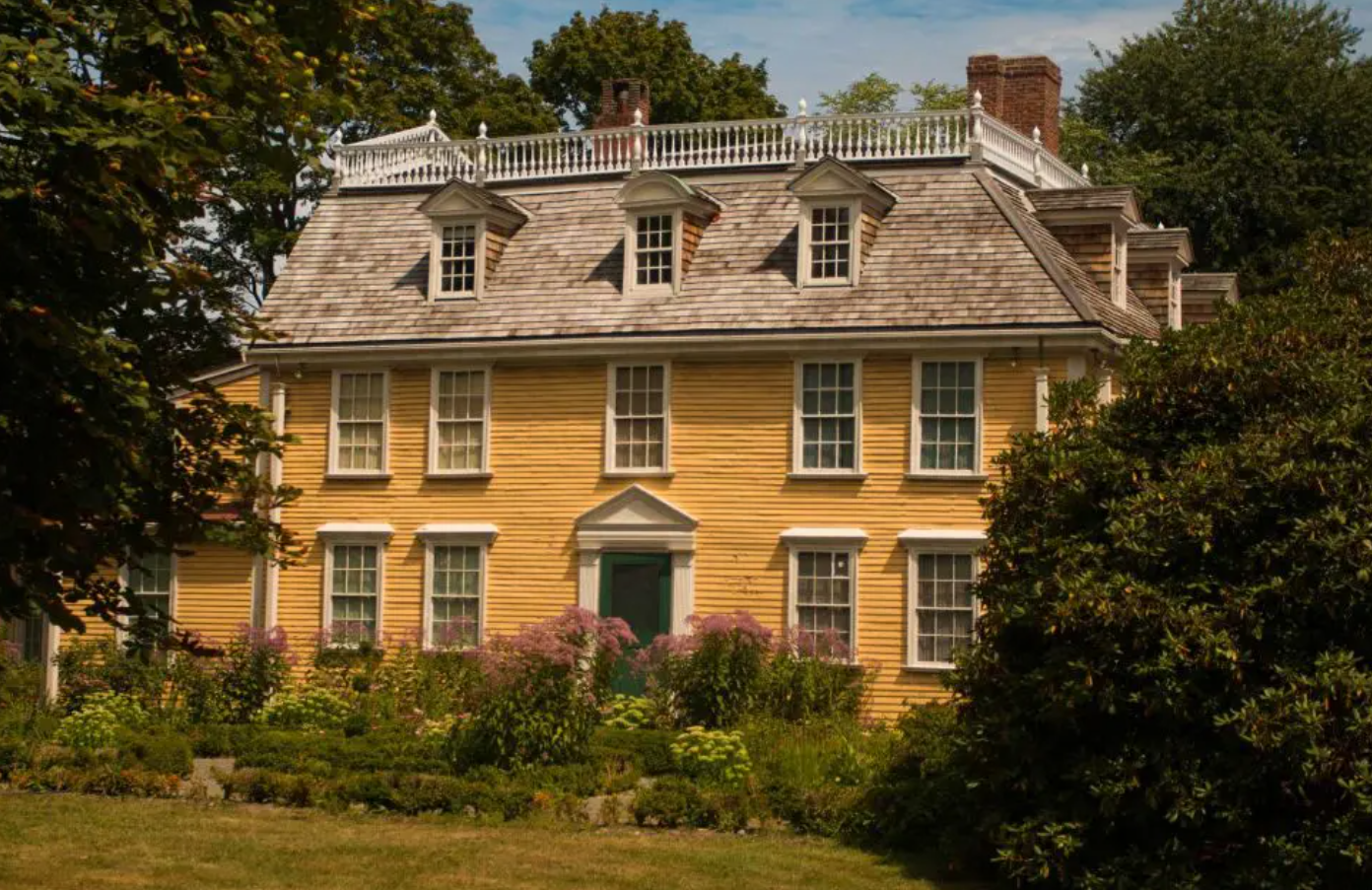
The Dorothy Quincy Homestead at 34 Butler Road is maintained jointly by the Massachusetts Department of Conservation and Recreation (exterior) and the National Society of Colonial Dames of America (interior). (Image: National Society of Colonial Dames of America)
The $325,000 request represents about a fifth of the $1.7 million in historic preservation funding the program has now and is one of eight proposals vying for this pot of funding.
State law requires the City to submit three bids for any CPA project estimated to cost more than $10,000, but non-government groups like the Dames need to submit only one. (The City already recommends that they submit more than one bid, but I encouraged the CPC to emphasize this in future information sessions about the program, since taxpayers are ultimately footing the bill for the work.)
Sometimes applicants request more than the bid amount(s) in case the project is more involved and expensive than expected. But grant money is only used to pay back the project’s actual costs (with receipts).
The City borrows money against future CPA revenues to pay for projects that fall into the four approved funding categories. As of June 2025, it had borrowed $31 million to pay for projects including the renovation of City Hall and the Coddington School, playground repairs, the Adams Academy and surrounding property, some property by Peacefield, 0 Harriet Avenue, and the old Beachcomber lot. CPA money will be used to pay off that principal, along with $13 million in interest, into the year 2052.
Ultimately, the council voted to approve the $325,000 for the exterior work on the Dorothy Quincy Homestead, since the project met the requirements for CPA funding, had been approved by the CPC, and was not going to receive immediate funding from the state.
The council approved the City’s proposed voting dates and locations for this year’s state election. Mark your calendars now: the primary (which will decide some of the races!) is on Tuesday, September 1st, and the election is on Tuesday, November 3. The ballot will include candidates for US Senate, US House, governor, lieutenant governor, secretary of state, treasurer, auditor, governor’s council, State Senate, State House, district attorney, register of probate, county commissioner, and county treasurer. I found out the other day that tens of thousands of Quincy residents still haven’t returned their city census forms. Please return those forms so you can vote seamlessly! You can also fill out and submit the form electronically.
At the meeting, the council also passed a resolution seeking to understand any changes implemented since the discovery of embezzlement by the City’s former head of elder services and a resolution requesting a comprehensive report of the City’s property transactions since 2010. My comments about the latter are here. I asked for the report on property transactions to be returned on Monday of this week (April 13), but the mayor’s chief of staff said the city is still working on pulling together the information.
April 13 finance committee meeting update:
This Monday, the council’s finance committee (which is a “committee of the whole” – made up of all nine councilors) met to discuss a proposed ordinance submitted by Council President Anne Mahoney that would add some guardrails to the City’s financial practices. These included rules around what “one-time” funds (such as individual grants) can be used for (not ongoing operating expenses), as well as quarterly financial reporting requirements. The ordinance also requires the City to maintain stabilization reserves (or rainy-day funds) equal to at least 10% of the money that the City regularly brings in from property taxes and other sources. Under the ordinance, the reserves could be allowed to dip below that 10% threshold if the mayor declared a fiscal emergency, two-thirds of the council voted to allow the change, and the administration submitted a plan to restore the reserves within three years.
The mayor’s chief of staff indicated that all of the items in the ordinance were acceptable to the administration, with the exception of the 10% reserve requirement. He argued that the council does not have the power to appropriate money, making that requirement toothless.
How much money does the City have in reserves now? The City’s finance director said the City has $9.8 million in reserves, and $374 million in recurring revenues. That means we have just 2.6% of recurring revenues in reserves, when the ordinance would require us to boost that to 10%, or $37 million.
I asked the finance director why the City wouldn’t want to maintain the 10% threshold, since the City’s own financial policy document specifies a “target [of] a 10% of reserves to revenue ratio”:

The finance director said that just as the S&P doesn't want cities to have reserves that are too small, it also doesn't want them to have reserves that are too big, because it would mean the city wasn't investing in maintaining its infrastructure. He said that the city's financial advisers recommend doubling the city's current reserves (to $20 million), which would take the reserve-to-revenue percentage from 2.6% to 5.3%.
I don’t really understand the argument, but he said the financial advisers and possibly someone from the S&P would be present at the April 27 council meeting, and the council may finish its discussion of this proposed ordinance that same night (it is still in the finance committee). I look forward to those discussions!
Globe piece
Speaking of discussions, The Boston Globe contacted me last month to ask how things were going, after some councilors were getting a lot of heat for talking about a bond request for new fire gear.
From the story:
For McKee, one of the new councilors, asking questions instead of rubber-stamping requests is how responsible civic government is supposed to function.
“I have to look at every issue that comes before us, and that’s why I ran for government, because I felt the City Council wasn’t doing that,” McKee said. “My personal goals really are to focus on the process, how we actually do things. I don’t want to go into any council meeting with a predetermined plan.”
The point I was trying to make was not that I want to go into council meetings unprepared – far from it! – but that I want to approach every meeting with an open mind and actually discuss and deliberate issues with my fellow councilors. That was not the standard for the previous council, but I genuinely feel it will lead to the best, fairest, and most transparent outcomes.
Upcoming events and reminders
Before June: Fill out and mail back your city census or submit it online to stay on the active voter list!
Before May 8: Sign up for weekly food waste pickup through Black Earth and get 20% off your first invoice using the code “EARTHDAY2026”. Getting food out of the trash not only helps the environment but also reduces rat populations by removing one of their main food sources!
Coming weeks: Nominate a local business for a free executive training program! The program, designed to help small businesses in under-resourced communities, starts on June 24 at an in-person meeting at Quincy College, then continues with digital learning and one-on-one coaching. Nomination form.
Saturday, April 18, 4:30 – 6:30 pm @ St. Chrysostom’s (1 Linden Street): Good Neighbors Food Pantry. Come to receive free, nutritious food and essential items — or to volunteer! Multilingual flyer about the monthly food pantry here. Contact 508.468.4099 or goodneighborsne@gmail.com for more information.
Wednesday, April 22, 7 pm @ United First Parish Church (1306 Hancock Street): Earth Day Climate Action Workshop. Hosted by Quincy Climate Action Network; flyer and registration here.
Saturday, April 25, 9:30 am @ 440 East Squantum Street: Stop the Stigma 5K. Register.
Monday, April 27: City council meeting. Details TBD.
Thursday, April 30, 5 pm: Deadline to send comments about National Grid’s proposed rate hike to state oversight agency. Email dpu.efiling@mass.gov and DPU2650.GridRateCase@mass.gov. Comments, including email addresses, will be posted unredacted.
Thursday, April 30, 6 pm: Next in-person resident council meeting. Fill out this form for details.
Monday, May 4: City council meeting. Details TBD.
Wednesday, May 6, 6 – 8 pm @ Alba (1486 Hancock): “Multilingual Rent Control Informational meeting to discuss how proposed policies may impact our local residents, businesses, and community,” hosted by the Quincy Chamber of Commerce and Housing for Massachusetts. RSVP required, limited to 80 attendees.
Thursday, May 7, 7 am to 3:15 pm @ 440 East Squantum St: Dana Farber’s Mammography Van. Pre-register for a mammogram in the van (insurance required) by calling 617.632.1974 or emailing mammo_van@dfci.harvard.edu. A mammogram saved my life – anyone 40 or over should consider taking advantage of this local opportunity for a screening!
Saturday, May 16, 8:30 – 10:30 am @ Sailors Home Pond (78 Rice Road): Turtle release! 🐢
Monday, May 18, 11:30 am @ 80 Clay Street: Public hearing on Quincy Housing Authority’s Draft Annual Plan. Submit written comments or direct questions to jmarathas@quincyha.com.
Wednesday, May 20, 10 am – 2 pm @ 440 East Squantum Street: Free skin cancer screening in van. Call 617.376.1023 to register.
Resources and ways to plug in
Anyone interested in serving as a volunteer on a city board or commission can send a note with your interest and background to the mayor’s chief of staff, Chris Walker, at cwalker@quincyma.gov. Please cc me at mmckee@quincyma.gov if you’d like me to follow up on your application.
To receive future newsletters by email, please sign up here.
To sign up for a resident council, fill out this form.
To learn about local organizations you can join and volunteer with, go here (and feel free to add any that are missing!).
City’s Community Resource Guide.
Report a pothole: Call 617-376-1914 or email potholehotline@quincyma.gov.
Report streetlight outages: Call 617-376-1478
The City’s Department of Elder Services offers FREE transportation to medical appointments for Quincy adults aged 60 and over. Call 617-376-1242 to register and schedule rides.
Free legal help: Lawyers Clearinghouse offers three legal clinics to help connect people with free legal help: (1) low-income and homeless clinic (they take a variety of cases but not immigration or family law); (2) record sealing and expungement (since people's records often keep them out of jobs and housing); (3) tax lien foreclosure (for people who are facing foreclosure by the city because they haven't paid their property taxes). If you or anyone you know could use their help, please contact Sean Thekkeparayil (sthekkeparayil@lawyersclearinghouse.org).
If you see federal agents in Quincy, please stay a safe distance away and call LUCE Immigrant Justice Network of Massachusetts with as much information as you can so they can verify the sightings: (617) 370-5023.
Before May 8: Sign up for weekly food waste pickup through Black Earth and get 20% off your first invoice using the code “EARTHDAY2026”. Getting food out of the trash not only helps the environment but also reduces rat populations by removing one of their main food sources!
